

I apply this new model to a few people I know, as well as to Trump and all of the main characters in Ayn Rand’s FOUNTAINHEAD. This templated means of deciphering complex personalities helps clarify “what is going on” when people (as they commonly do) present mixed pictures of intelligence and stupidity, mental health and illness.
Huxley’s simple ALPHA-GAMMA hierarchy based on 1) engineered intelligence fails to consider 2) personality/preference, 3) social positioning, and 4) the spectrum of mental health to psychopathy.
Huxley’s famous BRAVE NEW WORLD (described previously, included below) outlines a genetically engineered dystopian society controlled by government-imposed medicalization (SOMA which is basically a prediction of PROZAC) and strict social roles based on biomedically-manipulated abilities.
In Aldous Huxley’s Brave New World, the Alpha-Gamma hierarchy is part of a rigid, five-tier, genetically engineered caste system designed to ensure total societal stability and contentment. From highest to lowest, the castes are Alphas, Betas, Gammas, Deltas, and Epsilons.
However, human behavior is clearly more complicated than what can be predicted by any simple measure of intelligence. People also have personalities and preferences, and some are financially gifted (eg, Trump) while others are socially restrained from living to their full potential. Additionally, beyond intelligence, preference, and positioning we also have to consider mental health and psychopathy as major influences on social behavior. I explore and organize all these ideas in this spontaneous video and new diagram.
I fixed most of these problems in the new 4-point model presented in this new video embedded above.
I apply this new model to a few people I know, as well as to Trump and all of the main characters in Ayn Rand’s FOUNTAINHEAD. This templated means of deciphering complex personalities helps clarify “what is going on” when people (as they commonly do) present mixed pictures of intelligence and stupidity, mental health and illness.
ALPHAS and SIGMAS (2) brilliantly illustrated in Ayn Rand’s epic novel THE FOUNTAINHEAD
Ayn Rand’s epic novel THE FOUNTAINHEAD was famously considered the second-most influential book in the United States—second only to the Christian BIBLE—back in a time when people actually read real books and could maintain their attention for 750 pages.

While the book has been popular and mandatory reading for decades (my Literature/Grammar teacher wisely assigned it to me in high school), as with any work of art, it is commonly and selectively misinterpreted, even by the author herself. Ayn Rand was a brilliant writer but she was also horribly conflicted and at times confused by her own direction—this has been widely noted including by her former lover and colleague Dr Nathaniel Brandon. When Rand found an audience with right-leaning capitalists at a time when America’s racial segregation was still in full flame and African-Americans were blocked from social advancement and this social hierarchy fed her audience’s ego, she didn’t become a leader of her new audience but rather she fed them what they wanted to hear about capitalism, money, and their perceived social superiority. This observation is made most obvious in contrasting her first famous book THE FOUNTAINHEAD—which focuses on interpersonal struggles between sigmas vs alphas—against her second famous book ATLAS SHRUGGED, which is an absurd and dizzying tirade in favor of “free market capitalism” and against anything done for the public sphere.
When Rand found an audience with right-leaning capitalists at a time when America’s racial segregation was still in full flame and African-Americans were blocked from social advancement and this social hierarchy fed her audience’s ego, she didn’t become a leader of her new audience but rather she fed them what they wanted to hear about capitalism, money, and their perceived social superiority.
As I have noted over many years, Rand’s THE FOUNTAINHEAD is essentially a rewriting and modernization of Nietzsche’s THUS SPOKE ZARATHUSTRA, and this fact is made all the more obvious by Rand’s unnecessary and clumsy attack on Nietzsche in the introduction to her book. Her amazing interpersonal and social insights could not keep her from revealing her jealousy and contempt for the philosopher who paved the way for her ideas and her most famous book. As Sigmund Freud said (paraphrased), “I have to stop reading Nietzsche’s books otherwise I will never have an original idea myself.”
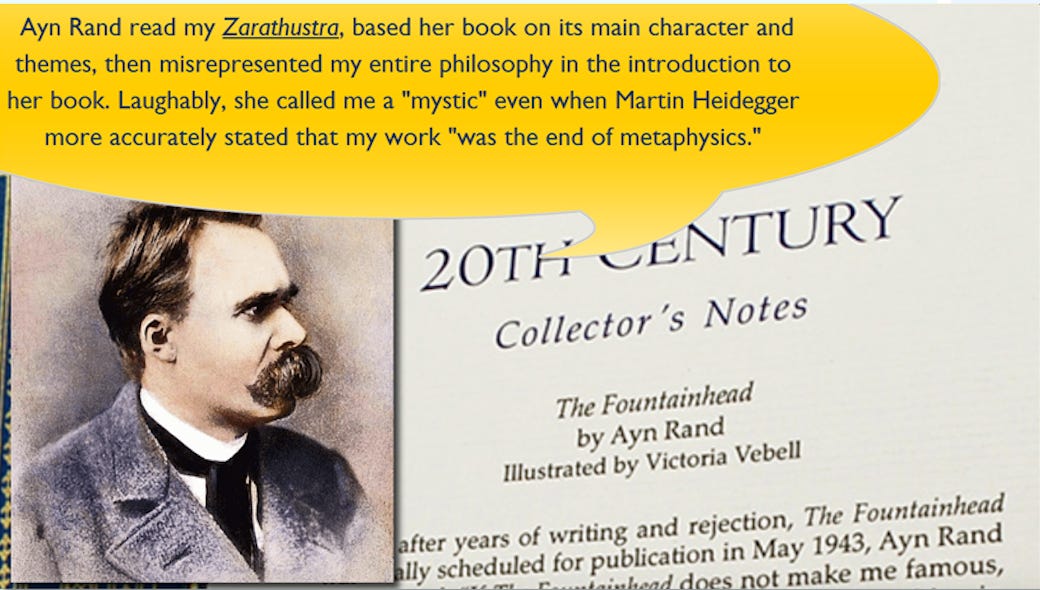
Ayn Rand read Nietzsche, studied Nietzsche, stole some of Nietzsche’s ideas, and then later attacked Nietzsche for being what she called “a mystic” which was obviously her way of communicating her self-serving interpretation and her jealousy because even though she was a brilliant writer, she wasn’t a world-transforming philosopher as was Nietzsche. Rand’s THE FOUNTAINHEAD is highly brilliant and equally sarcastic, and it’s also a rewriting and modernization of Nietzsche’s ZARATHUSTRA. Why else would she have unnecessarily and revealingly attacked him in the preface of her book, except to give the appearance of creating distance between her work and the work that she knew that she was reinterpreting?
Despite all of the above, THE FOUNTAINHEAD remains a must-read (or a must-listen) book for its social nuance and skilled use of language.
THE FOUNTAINHEAD is available in 3 major formats:
Book
Audiobook—full version by Christopher Hurt (Narrator)
absolutely brilliant
Audiobook—short version by Edward Herrmann (Narrator)
absolutely brilliant
I have both of the audiobook versions and have listened to them for thousands of hours.
In a follow-up post to this one, I will explain the differences between and reasons for the main characters:
Howard Rourke
Peter Keating
Dominique Francon
Gail Wynand
Henry Cameron
Ellsworth Toohey
and of course Mrs Keating…
Introduction and Reasons for this Conversation:
Personal interest: I have been interested in the differential between SIGMAS and ALPHAS for a while, and I have casually perused some available data in this conversation, an excellent sample (video) of which is provided below.
Psych interest: Obviously, I have an interest in many aspects of psychology and brain function, etc.
Recent personal experience—I met an ALPHA this weekend: I have not seen an ALPHA in so long that I was surprised to find myself in the audience of one this past weekend. He was clear, articulate, verbose, highly competent, and very aspirational/ambitious—exactly what we would expect from an ALPHA.
Did I accept his proposal and contract with him for the job?—YES, of course I did. This is exactly the type of interaction we would expect with an Alpha.
Upcoming personal experience—I have to fire an ALPHA-SIGMA this week: He does great—sometimes wonderful and spectacular—work at a reasonable salary. He’s friendly and appears to be generally trustworthy. He will be very difficult to replace.
So—given that he is exceptionally good in multiple dimensions—why am I firing him from the job he has had with me for the past 8 months?
Reflections on my own experiences and performance in the ALPHA-SIGMA field: Mistakes were made, and lessons were learned. I will talk about these very specifically.
When working with high-performing professionals, you’re helped by being able to identify and differentially interact with these types.
For those of you who are or work with ALPHAS and SIGMAS, the value of this post is to identify the defining characteristics, their faults, and how to correct and manage them for the best win-win outcome. When you can identify and differentiate between these high-performers, you will be able to predict their ASSETS and SHORTCOMINGS—whether you are working with them, working for them, or if you are one or the other—so that you can PREDICT and SKILLFULLY MANAGE and thus AVOID problems for the benefit of everyone involved.
Eg: “I know you want to do great work here, but…” vs “I know you have natural gifts for your work, but…”
What is goal and trajectory of an ALPHA? What are the problems and necessary corrections you would expect?
What is goal and trajectory of a SIGMA? What are the problems and necessary corrections you would expect?
BRAVE NEW WORLD Problems with ALPHAS and SIGMAS (1) Introduction and Identification
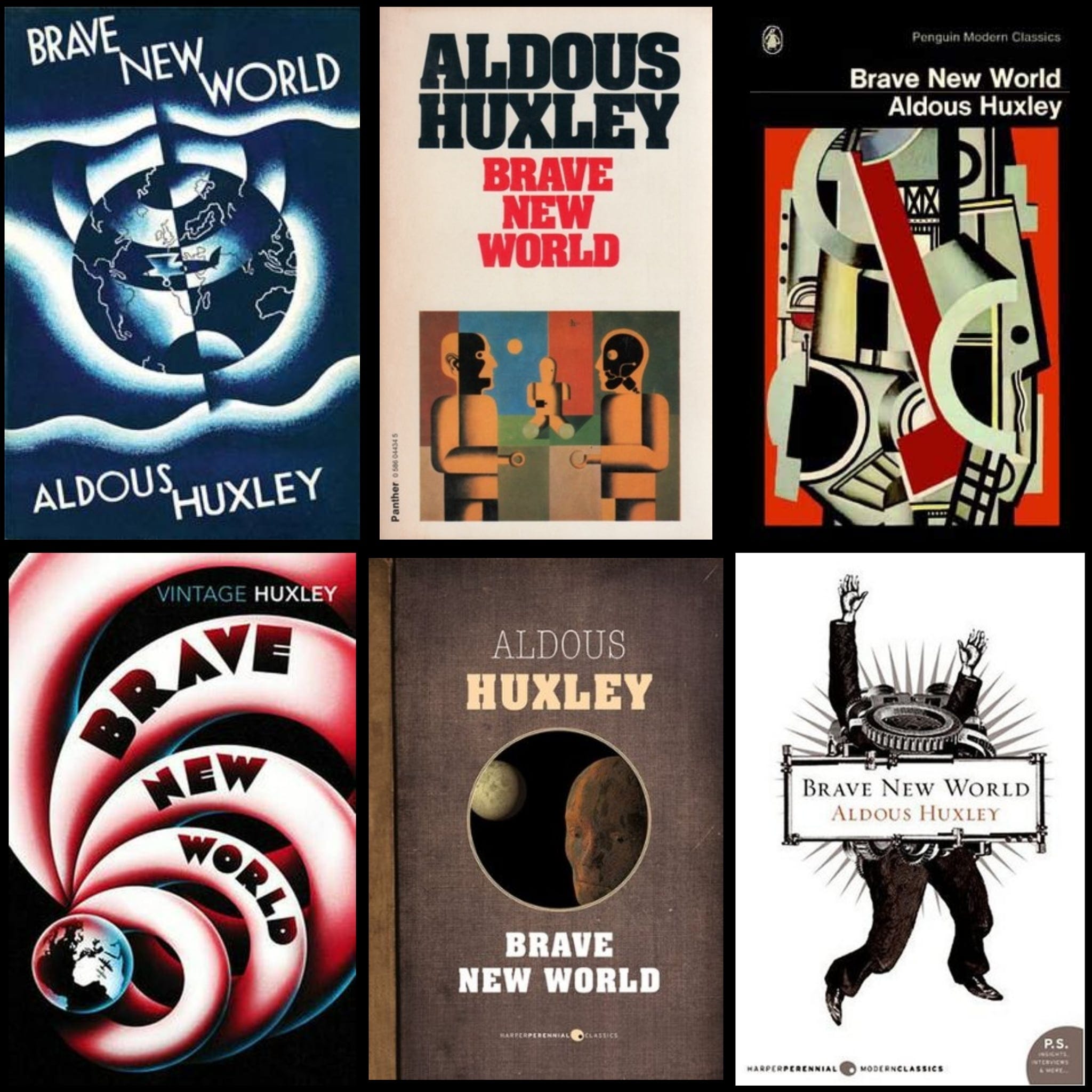
For many of us, our first introduction to the concepts of Alphas, Betas, and Gammas (etc) was in Aldous Huxley’s most famous book BRAVE NEW WORLD, in which he describes a futuristic world wherein society is essentially engineered from birth, controlled by drugs and pleasure, and stratified based on health and ability, which is also directly controlled by the government, which engineers health and illness in order to essentially “harvest” the human population for its purposes.
These ideas of a government-controlled genetically/medically-modified society reverberated through many other books and movies including:
1984 (book) by George Orwell
Matrix Trilogy (movies)
V for Vendetta (movie) that perfectly predicted the globalist 2019-2025 Covid plandemic
Hunger Games (books and movie)
Huxley’s Alphas, Betas, and Gammas…
Here, I provide a (hierarchically numbered) overview of this social order directly quoted from Huxley, and I have included 2 PDF copies of the book BRAVE NEW WORLD at the bottom of this page:
ALPHAS: “Alpha children wear grey: They work much harder than we do, because they’re so frightfully clever.
BETAS: I’m really awfully glad I’m a Beta, because I don’t work so hard. And then we are much better than the Gammas and Deltas.
GAMMAS: Gammas are stupid. They all wear green, and
DELTAS: Delta children wear khaki. Oh no, I don’t want to play with Delta children.
EPSILONS: And Epsilons are still worse. They’re too stupid to be able …”
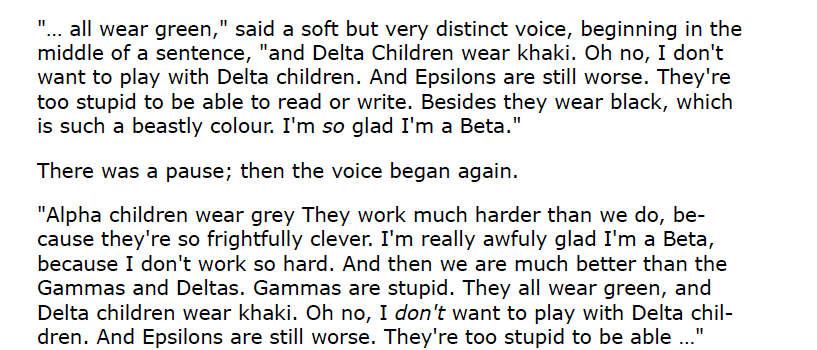
Those are the partial descriptions from Huxley’s BRAVE NEW WORLD—send any complaints to Mr Huxley’s estate.
Huxley’s perspectives: a few clips
Huxley is considered one of the leading social commentators of his time. He had planned to become a physician, but his poor eyesight prevented him from entry into the medical profession.
Beyond (or Beside!) Alpha
Huxley never mentioned the concept of “sigma” in BNW, so I have provided some explanations below, including a video that perfectly explains this difference.
In this writing, I am mostly concerned with ALPHAS and SIGMAS, the differences between them, and the problems that they present—along with some introductory solutions to those problems.
ALPHAS: the good parts
We all know that ALPHAS are the leaders, kings/queens of the mountain, the people who seek and gain positions of power. They seek to be at the top of the social pyramid—for better and for worse. They understand social games for the purpose of winning at those games. Alphas want to “be all they can be” and they generally seek to develop their highest potentials in every sphere of life: physically, mentally, professionally, and especially financially, etc. These are the team leaders, the presidents, the skilled managers. They seek to be at the top of the hierarchy, but they also define themselves by being at the top of that hierarchy, and thus they are limited to that hierarchy.
ALPHAS vs SIGMAS: the not-so-good parts
To keep this introduction short, I will conclude this provisional post with this excellent video that explains SIGMAS vs ALPHAS.


